Consent is one of the few cultural conversations where you can actually trace a generational arc. We've moved through three distinct frames in living memory, and we're in the early days of a fourth. Each frame was a real improvement on the last. Each frame, in being practiced widely enough, exposed its own limit. And the limit is what made the next frame necessary.
I want to walk through the arc, because where we are now — what I'd call 𝙖𝙩𝙩𝙪𝙣𝙚𝙢𝙚𝙣𝙩 𝙘𝙪𝙡𝙩𝙪𝙧𝙚 — only makes sense once you see what came before it and what each previous generation actually accomplished.
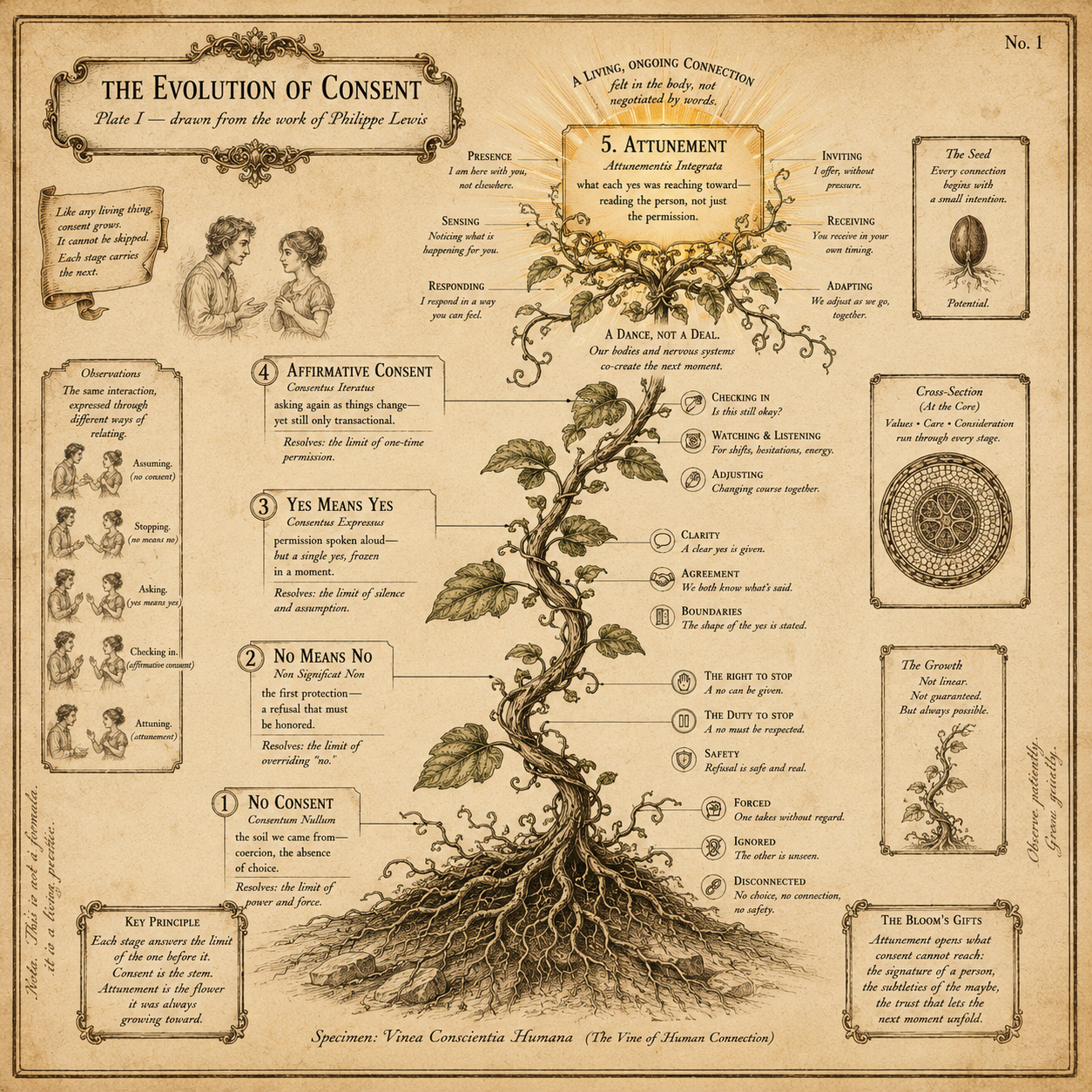
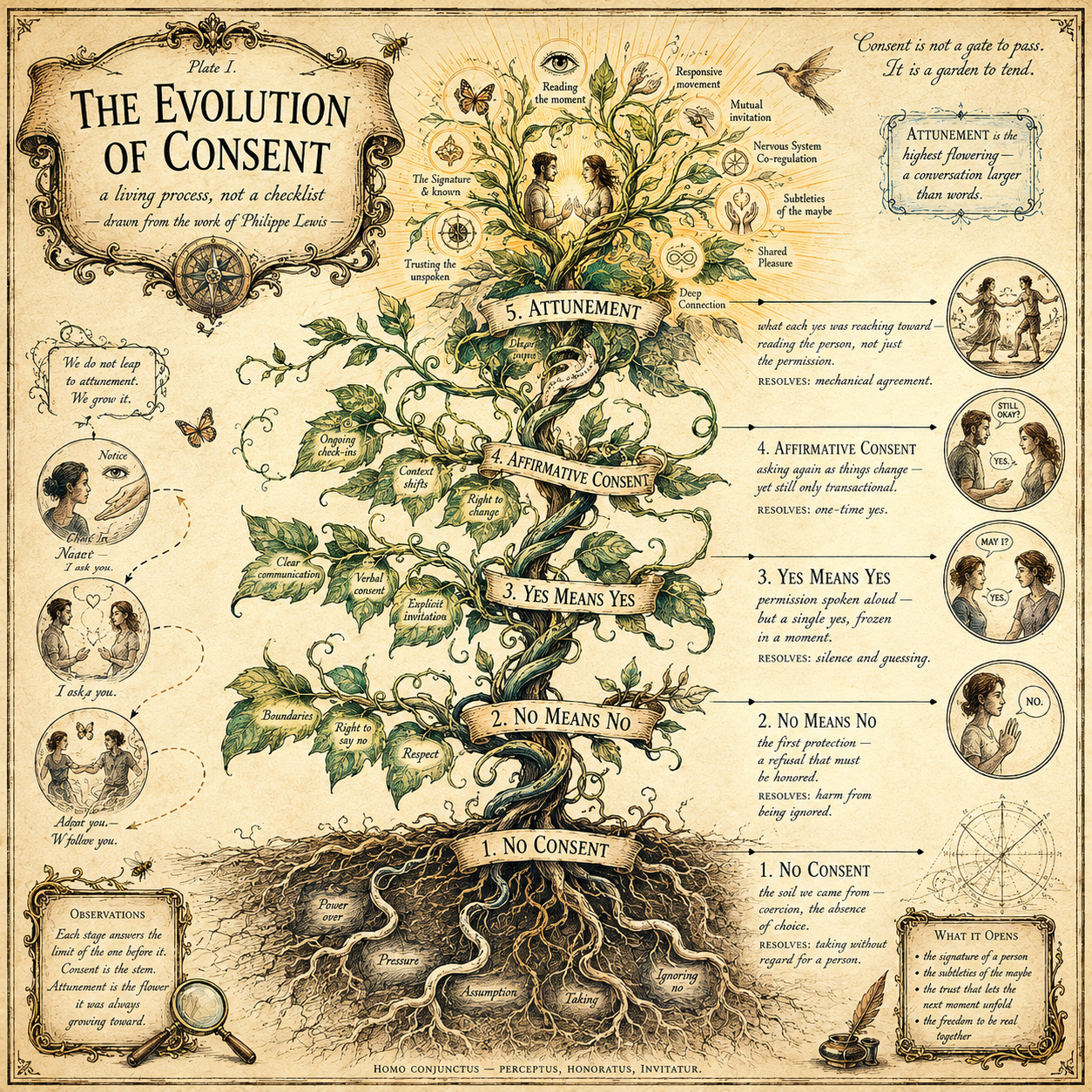
𝙉𝙤 𝙢𝙚𝙖𝙣𝙨 𝙣𝙤.
This was the first widespread cultural reframe, and it was a serious moral achievement. Before it, refusal was treated as ornamental — coy, negotiable, something to be charmed past. "No means no" said: refusal is a full sentence. The word ends the conversation. You don't get to talk your way around it.
What it did well: it gave refusal teeth. It made coercion legible as coercion. It gave people a clean line to point to.
What it couldn't do: it placed the entire weight of consent on the person being asked. It assumed the asked party would have a clear, accessible "no" available, would feel safe enough to voice it, and would face an asker who would actually hear it. None of those assumptions hold reliably under power, fear, freeze, fawn, or alcohol. A frame that requires the more vulnerable party to do all the work is a frame that will fail the people most likely to need it.
𝙔𝙚𝙨 𝙢𝙚𝙖𝙣𝙨 𝙮𝙚𝙨.
The next shift moved the burden. Instead of "refusal must be honored," the frame became: presence of an enthusiastic yes is required. Silence isn't consent. Stillness isn't consent. The absence of a no isn't a yes.
What it did well: it stopped treating non-resistance as agreement. It honored the reality that freeze is a survival response, not willing participation. It pushed askers to actually 𝘤𝘩𝘦𝘤𝘬.
What it couldn't do: it still treated consent as a verbal event — a moment, a signal, a checkpoint. And it created a new vulnerability that the next frame would try to address.
𝘼𝙛𝙛𝙞𝙧𝙢𝙖𝙩𝙞𝙫𝙚 𝙘𝙤𝙣𝙨𝙚𝙣𝙩.
The third frame tried to formalize the practice. Explicit asking. Ongoing checking. Specific to each act, each time. Documented in policies, taught in workshops, encoded into community agreements. This is where we built the vocabulary and the protocols that much of conscious sexuality culture now runs on.
What it did well: it made consent a conversation rather than a one-time event. It legitimized verbal asking, which had felt awkward to a generation raised on choreographed seduction. It gave communities shared language. It created accountability structures.
What it couldn't do: it conflated 𝘧𝘰𝘳𝘮 with 𝘴𝘶𝘣𝘴𝘵𝘢𝘯𝘤𝘦. A community can have flawless affirmative-consent vocabulary and still produce encounters where someone leaves fawned-out, dissociated, or quietly hollowed.
Here's what the protocol can't see.
A "yes" is not necessarily good or right or real for the person saying it. Sometimes a yes is the best option in a worst-case scenario — the safest move available, given the constraints the person is reading in the room. That kind of yes is structurally indistinguishable from an authentic one at the surface. The word is the same. The body language can be similar. The protocol box gets checked. But the motivational architecture underneath is entirely different.
There are two distinct ways a yes gets compromised, and they're worth naming separately because they get collapsed in most consent discourse.
𝙁𝙖𝙬𝙣𝙞𝙣𝙜 is saying yes to avoid something 𝘣𝘢𝘥 — harm, abuse, retaliation, escalation, abandonment in a way that endangers you. The threat may be real or perceived (the nervous system doesn't always distinguish), but the motivation is escape. Appeasement. De-escalation. Fawning is a survival response, cousin to fight, flight, and freeze. It is the body deciding that going along is the safest move available.
𝙋𝙚𝙤𝙥𝙡𝙚-𝙥𝙡𝙚𝙖𝙨𝙞𝙣𝙜 is saying yes to avoid losing something 𝘨𝘰𝘰𝘥 — someone's love, approval, protection, attention, social access, power, belonging, status. The yes is preservative. The person is reading the situation as one where saying no carries a cost they don't want to pay. The motivation is keeping the good thing flowing.
Both look like consent. Both pass affirmative-consent protocol cleanly. Both leave the person who said them depleted, dissociated, or quietly hollowed in a way that the protocol cannot account for. And the two have different upstream causes — fawning points to a safety deficit in the relationship or container; people-pleasing points to a relationship the person believes can't hold a no without retaliation through love-withdrawal. Different problems. Different repair paths.
The protocol can't tell the difference between 𝘐 𝘸𝘢𝘯𝘵 𝘵𝘩𝘪𝘴 and 𝘴𝘢𝘺𝘪𝘯𝘨 𝘺𝘦𝘴 𝘪𝘴 𝘵𝘩𝘦 𝘴𝘢𝘧𝘦𝘴𝘵 𝘮𝘰𝘷𝘦 𝘐 𝘩𝘢𝘷𝘦 𝘳𝘪𝘨𝘩𝘵 𝘯𝘰𝘸. That gap is what attunement culture is trying to address.
𝘼𝙩𝙩𝙪𝙣𝙚𝙢𝙚𝙣𝙩 𝙘𝙪𝙡𝙩𝙪𝙧𝙚.
Here's the shift, and it's a meaningful one. Each of the previous frames was concerned with 𝙩𝙝𝙚 𝙡𝙚𝙩𝙩𝙚𝙧 — what got said, what got asked, what got agreed to. Refusal must be honored. Enthusiastic yes is required. The protocol must be followed. These are rules about the form of the exchange, and they're real rules — I'm not arguing against any of them.
But attunement culture is concerned with something the letter can't reach: 𝙩𝙝𝙚 𝙨𝙥𝙞𝙧𝙞𝙩 𝙤𝙛 𝙩𝙝𝙚 𝙚𝙣𝙜𝙖𝙜𝙚𝙢𝙚𝙣𝙩 𝙞𝙩𝙨𝙚𝙡𝙛. Whether attunement, care, and consideration are actually present between two people while something is happening between them. Not whether the right words were said. Whether the right 𝘲𝘶𝘢𝘭𝘪𝘵𝘺 was present.
This is the difference between asking 𝘥𝘪𝘥 𝘸𝘦 𝘧𝘰𝘭𝘭𝘰𝘸 𝘵𝘩𝘦 𝘳𝘶𝘭𝘦𝘴? and asking 𝘸𝘦𝘳𝘦 𝘸𝘦 𝘢𝘤𝘵𝘶𝘢𝘭𝘭𝘺 𝘩𝘦𝘳𝘦, 𝘸𝘪𝘵𝘩 𝘦𝘢𝘤𝘩 𝘰𝘵𝘩𝘦𝘳, 𝘵𝘢𝘬𝘪𝘯𝘨 𝘤𝘢𝘳𝘦?
The two questions can have opposite answers in the same encounter. You can follow every rule and not be present. You can ask the right questions and not actually care about the answer. You can get a clean yes and still be moving through the other person rather than meeting them. The letter holds. The spirit fails. And the person who said yes walks away knowing something was off, even if they can't name what.
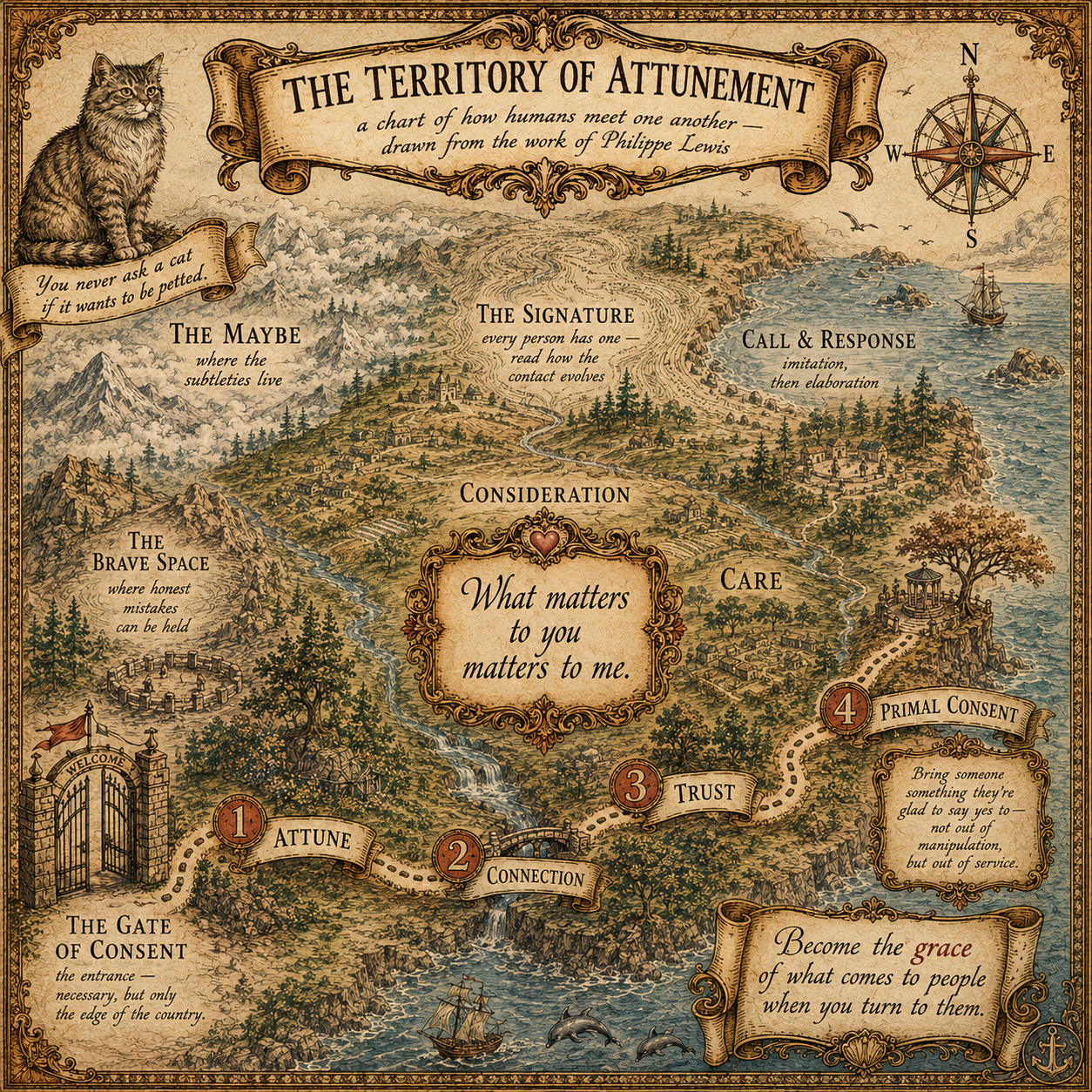
Attunement culture says: the rules are necessary but not sufficient. What matters underneath the rules is whether 𝙖𝙩𝙩𝙪𝙣𝙚𝙢𝙚𝙣𝙩, 𝙘𝙖𝙧𝙚, 𝙖𝙣𝙙 𝙘𝙤𝙣𝙨𝙞𝙙𝙚𝙧𝙖𝙩𝙞𝙤𝙣 are actually animating the exchange. Each one is doing distinct work.
𝘼𝙩𝙩𝙪𝙣𝙚𝙢𝙚𝙣𝙩 is 𝘧𝘦𝘦𝘭𝘪𝘯𝘨 𝘪𝘯𝘵𝘰 𝘢𝘯𝘰𝘵𝘩𝘦𝘳. The capacity to track the actual person in front of you — their pace, their state, their desires, their edges — rather than the average person or the version you're projecting. Attunement is the ground. Without it, everything that follows is built on guesses about someone you haven't actually met.
𝘾𝙖𝙧𝙚 is 𝘴𝘶𝘱𝘱𝘰𝘳𝘵𝘪𝘯𝘨 𝘴𝘰𝘮𝘦𝘰𝘯𝘦 𝘪𝘯 𝘢 𝘸𝘢𝘺 𝘵𝘩𝘢𝘵 𝘸𝘰𝘳𝘬𝘴 𝘣𝘦𝘴𝘵 𝘧𝘰𝘳 𝘵𝘩𝘦𝘮. Not what feels caring to me. What actually lands as support for the person I'm with. Care is something I extend toward you — I'm in the supporting role — and it's defined by what works for 𝘺𝘰𝘶, not by what feels generous on my end.
𝘾𝙤𝙣𝙨𝙞𝙙𝙚𝙧𝙖𝙩𝙞𝙤𝙣 is 𝘸𝘩𝘢𝘵 𝘮𝘢𝘵𝘵𝘦𝘳𝘴 𝘵𝘰 𝘺𝘰𝘶, 𝘮𝘢𝘵𝘵𝘦𝘳𝘴 𝘵𝘰 𝘮𝘦. It's the relational stance that the other person's priorities, needs, and constraints actually carry weight in how I act. Consideration is what makes another person's reality something I'm shaped by, not just something I notice.
When these are present, consent stops being something one person extracts and the other dispenses. It becomes the natural shape of what's happening. Both people are in the conversation. Both are extending consideration toward what they're genuinely available to do together. The inquiry is shared, not parallel.
That's attunement culture. Not a new protocol. A different 𝘴𝘱𝘪𝘳𝘪𝘵 of engagement that the protocol is supposed to be in service of.
This is also why the sequence — 𝙖𝙩𝙩𝙪𝙣𝙚𝙢𝙚𝙣𝙩 𝙡𝙚𝙖𝙙𝙨 𝙩𝙤 𝙘𝙤𝙣𝙣𝙚𝙘𝙩𝙞𝙤𝙣, 𝙘𝙤𝙣𝙣𝙚𝙘𝙩𝙞𝙤𝙣 𝙡𝙚𝙖𝙙𝙨 𝙩𝙤 𝙩𝙧𝙪𝙨𝙩, 𝙩𝙧𝙪𝙨𝙩 𝙡𝙚𝙖𝙙𝙨 𝙩𝙤 𝙘𝙤𝙣𝙨𝙚𝙣𝙩 — matters more than the asking. Each link is built from attunement, care, and consideration. Reverse the order, ask first and attune later, and you get a yes that came out of the wrong spirit. The form is right. The substance is thin.
The 4 Aspects of Consent — Ready, Willing, Able, Informed — still matter. They're how you diagnose when a yes is technically there but substantively absent. But the diagnosis almost always points upstream. When someone wasn't ready, or wasn't actually willing, or wasn't able, or wasn't informed, the gap didn't open at the asking. It opened earlier — somewhere in the sequence, the spirit broke down. Attunement faltered, or care wasn't really there, or consideration didn't translate into action.
Attunement culture asks something different than the previous frames. It doesn't ask: 𝘥𝘪𝘥 𝘳𝘦𝘧𝘶𝘴𝘢𝘭 𝘨𝘦𝘵 𝘩𝘰𝘯𝘰𝘳𝘦𝘥? It doesn't ask: 𝘸𝘢𝘴 𝘵𝘩𝘦𝘳𝘦 𝘢𝘯 𝘦𝘯𝘵𝘩𝘶𝘴𝘪𝘢𝘴𝘵𝘪𝘤 𝘺𝘦𝘴? It doesn't ask: 𝘥𝘪𝘥 𝘸𝘦 𝘧𝘰𝘭𝘭𝘰𝘸 𝘵𝘩𝘦 𝘱𝘳𝘰𝘵𝘰𝘤𝘰𝘭? It asks: 𝙬𝙚𝙧𝙚 𝙬𝙚 𝙖𝙘𝙩𝙪𝙖𝙡𝙡𝙮 𝙥𝙧𝙚𝙨𝙚𝙣𝙩 𝙬𝙞𝙩𝙝 𝙚𝙖𝙘𝙝 𝙤𝙩𝙝𝙚𝙧? 𝙒𝙚𝙧𝙚 𝙬𝙚 𝙩𝙖𝙠𝙞𝙣𝙜 𝙘𝙖𝙧𝙚? 𝙒𝙚𝙧𝙚 𝙬𝙚 𝙚𝙭𝙩𝙚𝙣𝙙𝙞𝙣𝙜 𝙘𝙤𝙣𝙨𝙞𝙙𝙚𝙧𝙖𝙩𝙞𝙤𝙣 𝙩𝙤𝙬𝙖𝙧𝙙 𝙬𝙝𝙖𝙩 𝙬𝙖𝙨 𝙜𝙚𝙣𝙪𝙞𝙣𝙚𝙡𝙮 𝙖𝙫𝙖𝙞𝙡𝙖𝙗𝙡𝙚 𝙗𝙚𝙩𝙬𝙚𝙚𝙣 𝙪𝙨?
That question can't be answered by checking boxes. It requires the practice.
I want to be clear about what I'm 𝘯𝘰𝘵 saying. Attunement culture doesn't replace the previous frames. It includes them. "No means no" is still a floor — refusal is still a full sentence. "Yes means yes" is still right — silence isn't consent. Affirmative consent's protocols are still useful — explicit asking is still better than guessing. The attunement frame doesn't dismiss any of that. It refuses to mistake the floor for the whole house, but it doesn't tear up the floor.
What it adds is the recognition that the rules were always trying to point at something underneath them — that the letter was always meant to protect the spirit. We're catching up to what the rules were for.
This is harder than protocol. Protocol can be taught in a workshop. The spirit takes years of practice and a willingness to be clumsy in public. It requires you to feel things you'd rather not feel — your own desire and its edges, the other person's hesitation and what it might cost them to name it, the difference between the room's permission and this particular person's readiness. It asks you to be willing to stop mid-sentence, mid-touch, mid-anything, because something in the field has shifted and you noticed.
That noticing is the practice. Not the asking. The asking is downstream.
So if you've been working the protocol diligently and finding that something still feels off — in your encounters, in your community, in yourself — I'd offer this: the protocol was never meant to do the whole job. It was meant to make the harder work possible. The harder work is the spirit. We're learning it now.
That's the dance. And like any dance worth learning, it asks for years of practice and a willingness to be clumsy in public.
(Written with the support of Claude.ai as I attempt to teach it to write in my voice and hold my body of work. Concepts expressed are mine.)
And here’s a few images created by ChatGPT in response to a conversation I had with a friend about how my events are “consent adjacent”, which I interpret to mean “attunement forward” rather than focused on explicit consent. Very cool!